LF logo
by learnformula
search
LearnFormula BusinessLog in
search
Courses/Pharmacy/Diabetes and Endocrinology

Diabetes Management

Strategies for Achieving Optimal Control and Reducing Complications.
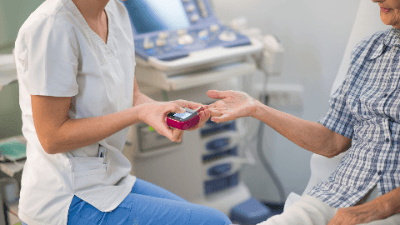
Created bySkaggs School of Pharmacy & Pharmaceutical Sciences
BeginnerUpdated Apr 18, 2025
Diabetes Management

What You'll Learn

check_circleUnderstand the products that are available for blood glucose monitoring.
check_circleIdentify the different types of blood glucose monitoring technologies.
check_circleDifferentiate between blood glucose monitors, continuous glucose monitors, and sensors.
check_circleRecognize the limitations of each blood glucose monitoring technology.
check_circleCounsel patients about blood glucose monitoring technology to help them manage their diabetes.

About This Course

Diabetes management is not one-size-fits-all. Everyone’s treatment plan must consider factors such as age, lifestyle, coexisting health conditions, and social determinants of health. Effective diabetes care is critical to reducing the risk of serious complications, including cardiovascular disease, kidney damage, nerve issues, and vision loss.

This course is designed to provide a deep dive into pattern management for patients with complex diabetes. Although developed by pharmacists, it is built for all healthcare professionals committed to delivering patient-centered diabetes care.

Through 12 comprehensive, self-paced modules, participants will explore advanced concepts in diabetes management, aligned with current best practices and technological innovations. The program equips healthcare providers with knowledge, practical skills, and confidence to improve outcomes for individuals living with diabetes.

Be part of the solution—join us in combating the diabetes epidemic and making a lasting impact on patient health.


MODULES

1. SMBG Technology – Wes Nuffer

  • Compare SMBG technologies and recommend based on patient needs.
  • Suggest meters and testing frequency per case.

2. Maximizing SMBG – Sam Ellis

  • Analyze SMBG patterns for treatment goals.
  • Improve SMBG use for better outcomes.

3. CGM Overview – Sam Ellis

  • Compare CGM features (wear time, alerts, sharing).
  • Match CGM types to patient profiles.

4. Interpreting CGM Data – Jenn Trujillo

  • Recognize glucose profile components and targets.
  • Apply stepwise interpretation of CGM data.

5. Optimizing with CGM – Jenn Trujillo

  • Identify glucose patterns.
  • Modify treatment using CGM data.

6. Insulin Pump Therapy – Sam Ellis

  • Distinguish between pump options.
  • Understand benefits of pump-CGM integration.

7. Insulin Products – Wes Nuffer

  • Categorize insulins by action profiles.
  • Choose insulin combinations based on patient traits.

8. Non-Insulin Therapy (T2D) – Jenn Trujillo

  • Select suitable non-insulin treatments.
  • Know when and how to intensify them.

9. Insulin in Type 1 – Sam Ellis

  • Start and adjust CI/CF therapy.
  • Tailor insulin dosing strategies.

10. Non-Glucose Outcomes – Wes Nuffer

  • Review trials showing other clinical benefits.
  • Apply findings to relevant patients.

11. Insulin in Type 2 – Jenn Trujillo

  • Start/intensify insulin in T2D.
  • Adjust other meds when adding insulin.

12. Hypoglycemia – Wes Nuffer

  • Teach recognition/prevention of lows.
  • Assess and minimize hypoglycemia risk.

Your Instructor

Skaggs School of Pharmacy  & Pharmaceutical Sciences
Skaggs School of Pharmacy & Pharmaceutical Sciences

Committed to advancing pharmacy education, research, and patient care.

menu_book14 courses

Skaggs School of Pharmacy and Pharmaceutical Sciences is committed to advancing pharmacy education, research, and patient care. Through innovative curricula, cutting-edge research, and experiential learning, the school prepares future pharmacists and pharmaceutical scientists to excel in diverse healthcare settings. With a strong emphasis on interdisciplinary collaboration and community engagement, we strive to improve health outcomes and advance the profession through leadership, innovation, and service.

Credit Information

What Students Are Saying

0.0
Student's Choice
0 reviews

Frequently Asked Questions

We are a registered provider with 327+ associations and regulatory bodies worldwide. We operate across 29 global markets including Canada, the US, Australia, and the UK. Every course page clearly displays its specific accreditations. Upon completion, you receive a professional certificate that can be validated online. Our certificates include all necessary accreditation details, credit hours, and completion dates, and are formatted specifically to meet the submission requirements of most global regulatory bodies.

You May Also Like

Human Resources: Workforce Planning and Talent Management

Why Your Best Employees Keep Leaving and What HR Can Do About It

star5.0(2)
1 CPD hr
Communication: Business Communication

Master the Science of Workplace Influence and Persuasion

star5.0(9)
3 CPD hrs
Health Safety Welfare: Health Safety Welfare - General

Employer's Handbook for Emergency Response Planning and Evacuation Procedures

1 CPD hr